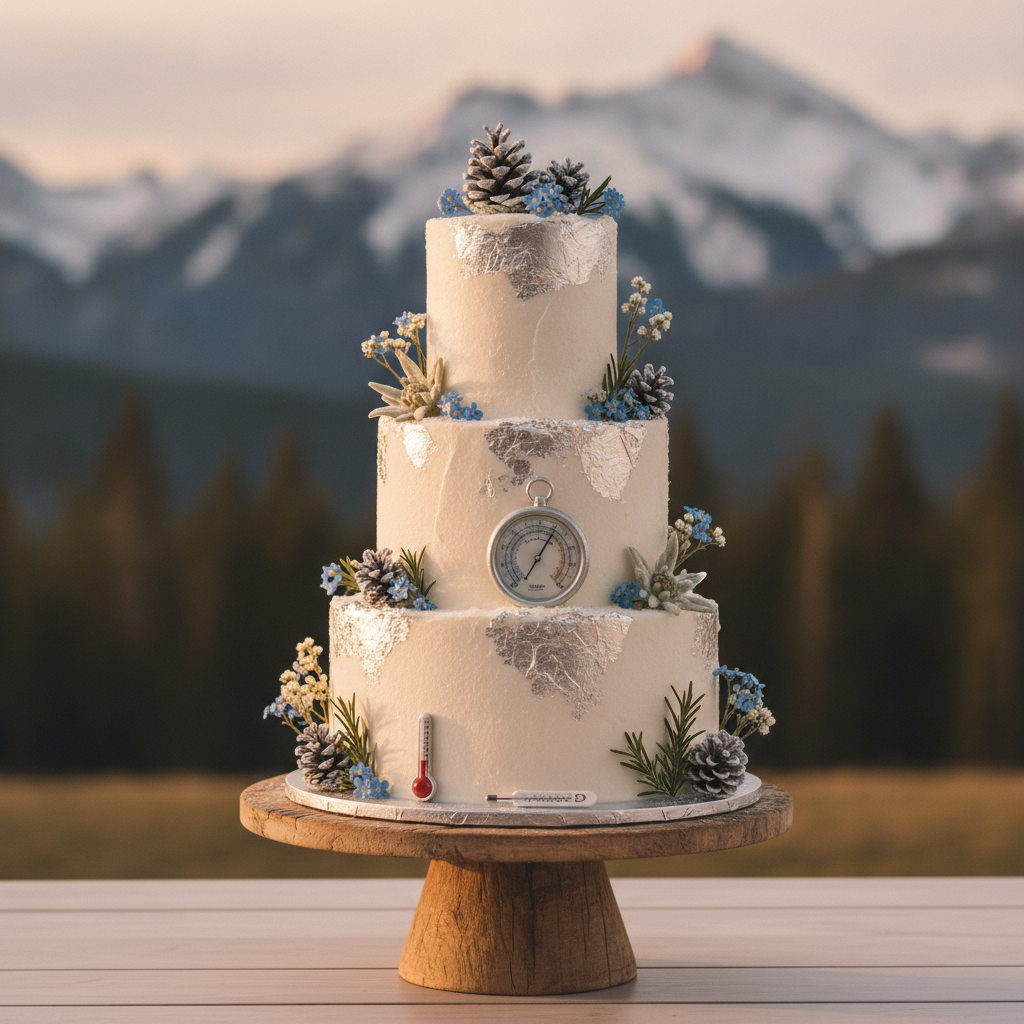
Essential High Altitude Wedding Cake Tips for Mountain Nuptials
Planning a mountain wedding? Discover essential high altitude wedding cake tips to ensure your dessert survives lower pressure and dry air beautifully.
Sophia Patel
Planning a breathtaking mountain wedding above 5,000 feet? While the views are spectacular, the thin air brings unique challenges for your dessert. Lower atmospheric pressure wreaks havoc on sponge density, moisture retention, and buttercream stability. Understand how elevation impacts baking before you lock in your plans. Read on for our top high altitude wedding cake tips to ensure your cake looks stunning and tastes incredible on your big day!
The Science of Baking Above 5,000 Feet
Baking is a delicate science, and altitude changes all the rules. At higher elevations, specifically above 5,000 feet, lower atmospheric pressure means that the leavening agents in cake batter—like baking soda and baking powder—work much faster. Gases expand rapidly, which can cause a cake to rise too quickly and then completely collapse, resulting in a dense, heavy, or cratered sponge. This is precisely why our top high altitude wedding cake tips always start with proper recipe adjustment. Professional bakers must decrease leavening agents, increase baking temperatures slightly to set the cake's structure faster, and carefully adjust liquid ratios. If you are browsing our baker directory to find the perfect professional for your big day, always ask if they have specific experience adjusting their recipes for mountain venues. You want a baker who understands the exact chemistry required.
Moisture Retention in Dry Mountain Air
Mountain environments aren't just high; they are notoriously dry. This dramatic lack of humidity can sap the moisture right out of a freshly baked cake, leaving you with a crumbly, dry dessert that falls apart when cut. To combat this, bakers often add extra liquids, use simple syrups to soak the sponge, or incorporate rich ingredients like sour cream or buttermilk to lock in moisture. If you are opting for a rustic style cake with a "naked" or semi-naked finish, be aware that exposed cake layers dry out much faster at high altitudes. A fully frosted cake is often the safer, tastier choice for retaining moisture. Unsure of what design fits your mountain venue best? Take our wedding cake style quiz to explore altitude-friendly options that still look fabulous!
Buttercream Stability and Temperature Fluctuations
High altitude weddings often mean intense, direct sunlight during the day and rapid temperature drops at night. This poses a major threat to buttercream stability. Due to the thinner atmosphere, buttercream can melt under intense UV rays much faster than it would at sea level. If your reception is outdoors, rolled fondant or a stable Swiss Meringue buttercream might offer much more stability than a traditional, butter-heavy American buttercream. Discussing these environmental factors with your dessert professional is one of the most crucial high altitude wedding cake tips we can offer.
Local Mountain Bakers vs. Lower-Elevation Bakers
Couples often wonder if they should hire a local mountain baker or transport a cake from a nearby lower-elevation city (for example, bringing a cake up from Denver, CO to a venue in Aspen, Vail, or Breckenridge). Hiring a local mountain baker is usually the safest bet. They naturally bake at the elevation of your venue, meaning no unpredictable atmospheric or structural changes will occur during transport. If you do decide to hire a baker from a lower elevation, they must factor in the pressure change during the drive up the mountain. As the delivery vehicle climbs, the trapped air inside the cake layers expands. This phenomenon can easily cause fondant to bulge, buttercream to crack, or tiered layers to shift.
Key Questions to Ask Your Baker
Whether you choose a local artisan or import a cake from the city, you must vet your cake designer carefully. Ask these essential questions during your tasting: Have you ever delivered a cake to a venue at this specific altitude? How do you adjust your recipes to account for the low pressure and dry mountain air? If transporting from a lower elevation, how do you prevent the cake from expanding and cracking during the steep drive? What frosting type do you highly recommend for mountain weather? By following these high altitude wedding cake tips and asking the right questions, you will ensure your spectacular mountain celebration is capped off with a flawless, delicious dessert that your guests will rave about.
Frequently Asked Questions
Why do cakes collapse at high altitudes?
At high altitudes, lower atmospheric pressure causes the leavening gases in the cake batter to expand too rapidly. The cake rises before the structure can set in the heat of the oven, causing the air bubbles to burst and the cake to collapse into a dense layer.
Is it safe to transport a wedding cake up a mountain?
It can be risky. As you drive to higher elevations, the air pressure drops, causing the air trapped inside the cake layers and frosting to expand. This can lead to cracked buttercream, bulging fondant, or leaning tiers. It is highly recommended to hire an experienced baker.
Are naked cakes a good idea for mountain weddings?
Naked and semi-naked cakes are generally not recommended for high altitude weddings. The mountain air is very dry and lacks humidity, which will quickly pull the moisture out of any exposed cake sponge, leaving it dry and crumbly.
Do I need a different frosting for a high elevation wedding?
High elevation venues often experience intense direct sunlight and rapid temperature changes. Stable frostings like Swiss Meringue buttercream or fondant hold up better against mountain elements than traditional American buttercream, which can melt quickly in direct sun.
Should I hire a local mountain baker or bring one from the city?
Hiring a local mountain baker is the safest option because they already bake at the same atmospheric pressure as your venue. This eliminates the risk of altitude-induced transport damage and ensures the recipe is perfectly calibrated for the environment.
Written by Sophia Patel
Dessert & Design Editor at WeddingCakes Hub. Helping couples find their perfect wedding cake.
Sponsored
BakeOnyx AI — AI-Powered Cake Design Tools
Turn your cake vision into reality — generate custom designs, get instant pricing estimates, and streamline your baking workflow with AI.
Learn more →Looking for a wedding cake baker?
Browse our directory to find the perfect baker near you.
Find Bakers