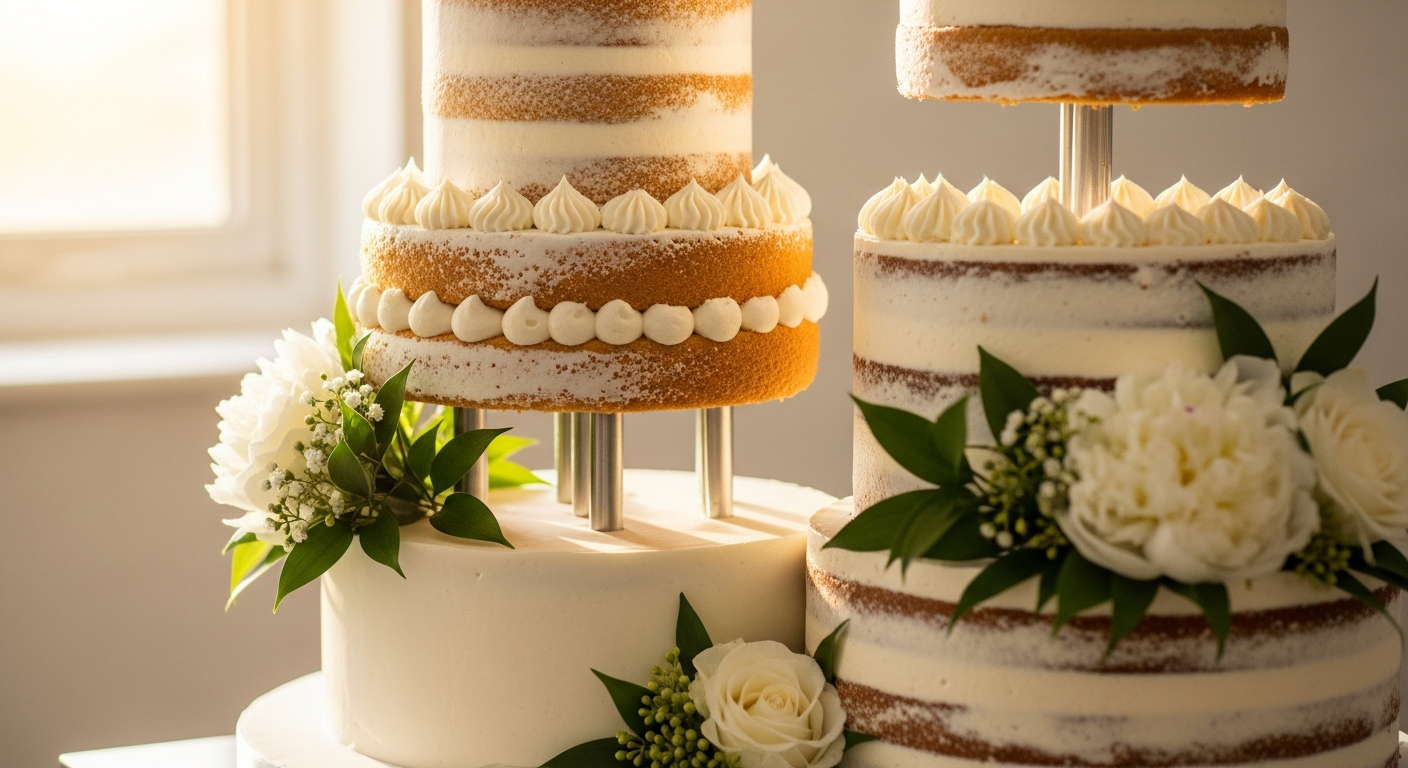
Naked Wedding Cake Assembly Timeline Guide: Expert Tips for a Flawless Reveal
Master the naked wedding cake assembly timeline guide with expert baker insights on baking schedules, crumb coating, and fresh flower decoration timing.
James Porter
Your naked or semi-naked wedding cake is one of the most beautifully effortless-looking desserts you can choose — but don't let the minimalist aesthetic fool you. Behind that rustic, unfrosted charm lies careful planning and precise timing. Whether you're working with your baker or coordinating a DIY setup, understanding the full naked wedding cake assembly timeline guide will be the difference between a showstopping centerpiece and a crumbling, wilted disappointment on your big day.
Why Timing Is Everything for Naked and Semi-Naked Cakes
Unlike fully frosted tiered cakes where thick buttercream acts as a protective shell and structural buffer, naked and semi-naked cakes are intentionally exposed. That means every layer, every crumb, and every floral sprig is on full display. This beautiful vulnerability is also what makes timing so critical. Without the right assembly schedule, you risk dry cake edges, smeared crumb coats, structural collapse under heat, and wilted greenery — all before the first slice is cut.
This naked wedding cake assembly timeline guide breaks the entire process into manageable stages so nothing is left to chance.
Stage 1: Baking the Cake Layers (1–2 Weeks Before the Wedding)
Professional bakers agree on one thing: fresh does not always mean baked-the-morning-of. In fact, cake layers baked 3–5 days before the wedding are often easier to work with because they've had time to settle and firm up, making them less prone to crumbling during assembly.
For larger weddings or complex tiered cakes, bakers may begin baking 7–10 days in advance, wrapping cooled layers tightly in plastic wrap and storing them in the freezer. Freezing actually locks in moisture, and a properly thawed frozen cake layer can taste more tender than a freshly baked one that was rushed.
Key baking tips:
- Allow each layer to cool completely (at least 2 hours at room temperature) before wrapping
- Label each layer with its flavor and tier size
- Store in an airtight container or double-wrapped in plastic to prevent freezer burn
- Thaw wrapped layers in the refrigerator overnight before assembly
If you're still deciding on cake flavors and styles, take our wedding cake style quiz — it only takes a few minutes and can help you narrow down what will photograph beautifully for a naked design.
Stage 2: Crumb Coating (2–3 Days Before the Wedding)
The crumb coat is the thin layer of buttercream applied to seal in stray crumbs before the final (minimal) frosting application. For naked cakes, this step IS the final coat — so precision matters enormously.
Timing the crumb coat:
- Apply the crumb coat no earlier than 3 days before the wedding
- After coating each tier, refrigerate uncovered for 20–30 minutes to set the buttercream
- Once set, loosely cover with plastic wrap (avoid pressing against the surface) and refrigerate
Semi-naked finish: Apply a slightly thicker pass of buttercream after the initial crumb coat sets, then use a bench scraper to drag it back, revealing the cake beneath in deliberate, artistic streaks. Chill again before stacking.
Professional insight: Buttercream formulated with a higher ratio of shortening to butter holds up slightly better in warm venues, while an all-butter recipe delivers the best flavor and a creamier appearance — something to discuss with your baker based on your venue's climate.
Stage 3: Stacking and Structural Support (1–2 Days Before or Morning Of)
Naked cakes rely on internal doweling and proper board placement just as much as any other tiered cake — perhaps more so, because there's no thick outer frosting to help hold things together visually if there's a slight lean.
Structural essentials:
- Use food-safe wooden or plastic dowels inserted into each tier below the top one
- Cut dowels flush with the top of each tier before placing the tier above
- Anchor each tier to its individual cake board with a thin layer of buttercream
- Use a central dowel running through all tiers for cakes taller than three tiers
For same-day delivery setups, many professional bakers choose to transport tiers separately in refrigerated vehicles and stack on-site. This dramatically reduces the risk of travel damage — especially important for naked cakes where any shifted tier is immediately visible.
If you're working with a baker in your area, browsing wedding cake bakers on WeddingCakeHub can help you find professionals experienced specifically in structural naked cake assembly.
Stage 4: Fresh Flower and Greenery Decoration (Morning of the Wedding)
This is where the naked wedding cake assembly timeline guide becomes most time-sensitive. Fresh flowers are living things, and they don't negotiate with wedding schedules.
Best practices for floral decoration:
- Never place fresh flowers directly on cake surfaces without florist tape or food-safe flower picks
- Ask your florist to prep stems with floral tape and wire the evening before, storing blooms in water overnight
- Place florals on the cake no more than 2–4 hours before it will be displayed or cut
- In warm or outdoor venues, reduce this window to 1–2 hours maximum
- Choose hardy blooms: garden roses, ranunculus, dahlias, and eucalyptus hold up longer than delicate peonies or lily of the valley
- Avoid flowers treated with pesticides — ask your florist specifically for food-safe varieties
Greenery tips: Eucalyptus, ferns, and ivy are excellent naked cake companions. However, trailing greenery should be placed last and secured gently so it doesn't disturb your crumb coat.
Stage 5: Day-Of Transport and Display
Once your cake is assembled and decorated, temperature control becomes your most important tool.
- Keep the cake refrigerated until 30–60 minutes before display
- In summer months or outdoor venues, set up the cake as close to serving time as possible
- Avoid direct sunlight — it softens buttercream rapidly and wilts florals
- Use a cake stand with a non-slip mat underneath
For couples planning rustic-style weddings, naked cakes are a natural choice — and local bakers who specialize in that aesthetic will often have the most experience with outdoor venue logistics.
Working With Your Baker: Questions to Ask
Whether you're in Austin, TX or planning a destination wedding elsewhere, clear communication with your baker is essential. Ask them specifically:
- What is your baking-to-wedding-day timeline for naked cakes?
- Do you use an all-butter or shortening-based buttercream, and why?
- Will you stack on-site or deliver pre-stacked?
- How do you handle flower placement — do you coordinate with our florist?
- What's your contingency plan for warm-weather or outdoor venues?
A baker experienced with naked cake assembly will have confident, specific answers to all of these questions. If you're still searching for the right professional, WeddingCakeHub's baker directory lets you filter by style, location, and specialty to find someone who truly understands the art of the exposed layer.
Frequently Asked Questions
How far in advance can I bake layers for a naked wedding cake?
Cake layers can be baked 3–5 days in advance and refrigerated, or up to 2 weeks ahead and frozen. Wrap each layer tightly in plastic wrap to preserve moisture. Frozen layers should be thawed overnight in the refrigerator before assembly. Freezing often improves texture by locking in moisture, making layers less crumbly during the crumb coat stage.
When should the crumb coat be applied on a naked wedding cake?
Apply the crumb coat 1–3 days before the wedding. After coating, refrigerate each tier uncovered for 20–30 minutes to set the buttercream, then loosely cover and keep chilled. For a semi-naked finish, apply a second thin pass after the first sets, scrape back with a bench scraper, and chill again before stacking the tiers.
How do you keep a naked wedding cake from drying out?
The exposed edges of a naked cake are vulnerable to drying. Apply your crumb coat as evenly as possible to seal the sponge, and keep assembled tiers refrigerated until close to serving time. Avoid baking layers more than 5 days ahead unless freezing them. Moisture-rich recipes like carrot cake or lemon sponge also help maintain texture even with minimal frosting.
When should fresh flowers be placed on a naked wedding cake?
Place fresh flowers on a naked wedding cake no more than 2–4 hours before it will be displayed or cut. In hot or outdoor settings, reduce this to 1–2 hours. Have your florist prep stems with floral tape the evening before and store blooms in water overnight. Always use food-safe flower picks to prevent stems from touching cake surfaces directly.
Can a naked wedding cake be made the day before the wedding?
Yes — and in fact, fully assembling and crumb coating tiers the day before is ideal. It allows the buttercream to set firmly, making transport safer and decoration easier on the wedding morning. Just keep the assembled tiers refrigerated overnight. Add fresh flowers and any delicate decorations on the morning of the wedding, not the night before.
Written by James Porter
Wedding Trends Editor at WeddingCakes Hub. Helping couples find their perfect wedding cake.
Sponsored
BakeBoost — Grow Your Baking Business
Marketing tools built for bakers — boost your online presence, manage bookings, and attract more wedding cake clients effortlessly.
Learn more →You May Also Like
Wedding Cake Smash Proof Alternatives: The Ultimate Guide to Outdoor Summer Wedding Cakes
Planning an outdoor summer wedding? Discover wedding cake smash proof alternatives, heat-resistant flavors, and stabilized frostings that survive the heat.
Apr 10, 2026
The Complete Wedding Cake Timeline: When to Book, Taste, and Finalize Every Detail
Plan your dream cake stress-free with our complete wedding cake timeline — from first consultations 12-18 months out to delivery day logistics.
Mar 5, 2026
Looking for a wedding cake baker?
Browse our directory to find the perfect baker near you.
Find Bakers