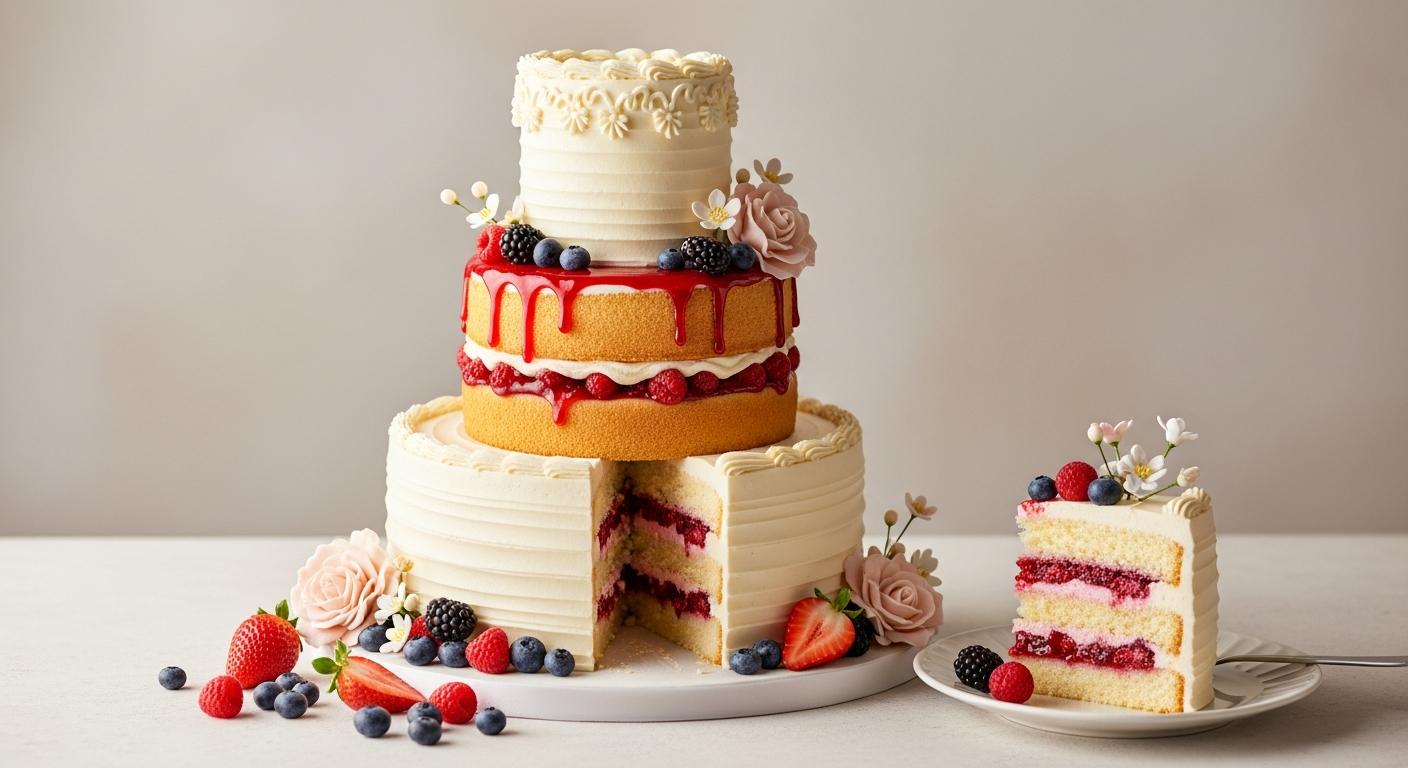
Wedding Cake with Fruit Filling Versus Buttercream: Taste, Cost & Durability Compared
Choosing a wedding cake with fruit filling versus buttercream? Compare flavor, structure, shelf-life & cost to find your perfect filling match.
Daniel Kim
Your wedding cake filling is more than just a flavor choice — it shapes every bite, affects how your cake holds up on the big day, and can meaningfully impact your budget. Whether you're dreaming of bright raspberry layers or a classic vanilla buttercream, the decision between a wedding cake with fruit filling versus buttercream deserves more thought than most couples realize. Let's break it all down so you can choose with confidence.
The Flavor Factor: Fresh Fruit vs. Buttercream
Flavor is usually the first consideration couples bring to their cake tasting, and rightfully so. Fresh fruit fillings — think strawberry, raspberry, mango, passion fruit, or lemon curd with blueberries — deliver a bright, tangy contrast that can cut through the richness of sponge and frosting. They feel vibrant and seasonal, and when paired with the right cake flavor (lemon sponge with raspberry, champagne cake with peach compote), the result is genuinely memorable.
Buttercream fillings, on the other hand, offer a broader spectrum of comfort-forward flavors: vanilla bean, chocolate fudge, salted caramel, espresso, or almond. They blend seamlessly with the cake layers, creating a cohesive richness that feels indulgent and familiar. For guests with varied palates — including children and those who find fruit overly tart — buttercream tends to be a crowd-pleaser.
If you're still exploring flavor combinations and not sure where to start, take our quick wedding cake quiz to narrow down your style and taste preferences before your first baker meeting.
Structural Integrity: How Fillings Affect Your Cake's Stability
This is where the wedding cake with fruit filling versus buttercream debate gets practical — and where many couples are surprised.
Fresh fruit fillings introduce moisture. Whole berries, fruit compotes, and even fruit curds release liquid over time, which can soften cake layers, cause internal slipping, and compromise the structural integrity of stacked tiers. In warm or humid environments (think summer outdoor receptions), this becomes a genuine concern. Bakers often compensate with moisture barriers like thin layers of buttercream or ganache applied between the sponge and the fruit filling, or by using stabilized fruit preserves rather than raw fresh fruit.
Buttercream fillings are structurally far more forgiving. They act as a mild adhesive between layers, don't release moisture, and remain stable across a wider range of temperatures (though all-butter buttercreams can soften in high heat). Swiss meringue and Italian meringue buttercreams are particularly stable and less sweet, making them a favorite among professional bakers for structural applications.
For multi-tiered cakes or venues with long transport times, many bakers will recommend buttercream internally even if fruit is your preference — sometimes offering a hybrid approach where a thin fruit layer is sandwiched between two buttercream layers for stability.
Shelf-Life Considerations
Most wedding cakes are consumed within a few hours of being cut, but transport time, setup, and display all matter. Fresh fruit fillings have a shorter window — raw fruit can begin to break down within 24-48 hours, and if your venue setup starts the morning of your wedding, timing becomes critical. Stabilized fruit curds (like lemon or passion fruit curd made with eggs and butter) last a bit longer but still require refrigeration until shortly before display.
Buttercream fillings are more shelf-stable. An American-style buttercream can sit at room temperature for 1-2 days without issue, and Swiss or Italian meringue versions handle a day at room temperature comfortably. This makes logistics considerably easier for your baker and venue team.
If you're planning a destination wedding or working with venues that have limited refrigeration — browse bakers near your venue on WeddingCakeHub to find professionals experienced with logistics in your area.
Cost Comparison: Are Premium Fruit Fillings Worth It?
Here's the honest breakdown:
- Basic buttercream fillings (American-style vanilla or chocolate) are the most affordable. Ingredients are inexpensive, preparation is straightforward, and they require no special handling.
- Premium buttercream flavors (salted caramel, Swiss meringue, brown butter) cost moderately more due to technique and ingredient quality.
- Fruit curd and compote fillings sit in the mid-to-upper range. Citrus curds and berry compotes require fresh ingredients and careful preparation.
- Fresh fruit fillings with whole berries are typically the most expensive option, especially when using out-of-season or imported fruits. Factor in the added structural work a baker must do to stabilize these layers.
On average, couples can expect fruit fillings to add $1–$3 per slice compared to standard buttercream. For a 100-guest wedding cake, that's a potential difference of $100–$300. Whether that premium is worth it depends entirely on how central flavor is to your wedding experience.
Choosing the Right Combination
Many couples don't realize they can mix and match. A rustic-style wedding cake with a naked or semi-naked finish pairs beautifully with visible berry compote layers — the aesthetic and flavor work together. A modern, architectural cake might call for a smoother, more stable buttercream interior to support sharp edges and clean tiers.
Hybrid approaches — like raspberry compote anchored by Swiss meringue buttercream on either side — give you the best of both worlds. Talk to your baker openly about your venue conditions, transport distance, and reception timeline. A skilled baker will guide you toward a filling strategy that delivers on flavor without compromising structure.
Final Thoughts
The wedding cake with fruit filling versus buttercream decision isn't just about taste — it's a balance of flavor ambition, logistical reality, and budget. Fruit fillings offer excitement and brightness; buttercream offers reliability and versatility. The best choice is the one that fits your wedding day conditions as beautifully as it fits your palate.
Frequently Asked Questions
Can you use fresh fruit filling in a wedding cake without it making the cake soggy?
Yes, but it requires technique. Experienced bakers apply moisture barriers — thin layers of buttercream or ganache — between the cake sponge and fruit filling to prevent sogginess. Using stabilized fruit compotes or curds rather than raw fresh fruit also helps significantly. Always discuss your venue conditions and timeline with your baker before committing to fresh fruit layers.
How much more does a wedding cake with fruit filling cost compared to buttercream?
Fruit fillings typically add $1–$3 per slice compared to standard buttercream options. For a 100-guest wedding, that's roughly $100–$300 more. Premium fruit curds (like passion fruit or lemon) and out-of-season berries sit at the higher end. Simple fruit preserves or compotes made from in-season fruit are the most budget-friendly fruit option available.
Which wedding cake filling is most stable for outdoor summer weddings?
Buttercream fillings — especially Swiss meringue or Italian meringue buttercream — are the most stable for warm outdoor settings. Fresh fruit fillings release moisture and can cause layers to slip in heat. If you want fruit flavor at a summer wedding, ask your baker about stabilized fruit curds used in small quantities alongside a buttercream barrier layer.
What flavors pair best with fruit fillings in wedding cakes?
Citrus sponges (lemon, orange, elderflower) pair beautifully with berry compotes or passion fruit curd. Champagne or vanilla sponge works well with peach, mango, or strawberry. Chocolate cake pairs surprisingly well with raspberry or cherry compote. The key is balancing sweetness and acidity — your baker can guide you through tastings to find the perfect match for your palate.
Can different tiers of a wedding cake have different fillings?
Absolutely — and many couples do exactly this. Having one tier with raspberry compote and another with salted caramel buttercream gives guests variety and lets you accommodate different preferences. The only consideration is ensuring your baker accounts for varying structural needs per tier, particularly if a fruit-filled tier is being stacked beneath or beneath another layer.
Written by Daniel Kim
Baker Spotlight Writer at WeddingCakes Hub. Helping couples find their perfect wedding cake.
Sponsored
RetailPOS AI — Smart Point of Sale for Bakeries
Streamline your bakery operations with AI-powered POS — manage orders, track inventory, and grow your business with intelligent analytics.
Learn more →You May Also Like
How to Write Perfect Wedding Cake Cutting Instructions for Caterers
Don't leave your beautiful wedding cake to chance! Our guide provides clear wedding cake cutting instructions for caterers to ensure perfect slices for every guest.
Jul 2, 2026
Beyond Delivery: Ensuring Your Wedding Cake Looks Picture-Perfect All Reception
Worried about your cake wilting? Our expert guide offers actionable tips for ensuring your wedding cake looks picture-perfect all reception long, from reveal to last dance.
Jun 30, 2026
Sweet Stories: Creative Wedding Cake Story Card Ideas
Discover elegant wedding cake story card ideas to share the meaning behind your design. Learn what to write and how to display your cake's unique story.
Jun 28, 2026
Looking for a wedding cake baker?
Browse our directory to find the perfect baker near you.
Find Bakers