The Ultimate Guide to Your Wedding Cake Champagne Tower Pairing
Master the perfect wedding cake champagne tower pairing with our step-by-step guide. Learn flavor matching, timing, and safety for a flawless reception moment.
Daniel Kim
Combining your cake cutting with a cascading bubbly pour is the ultimate reception showstopper. However, pulling off a seamless wedding cake champagne tower pairing requires more than just popping corks. From matching sparkling wine to your cake's flavor profile, to keeping sticky spills away from your dessert, we have all the practical advice you need. Read on to master the timing, aesthetics, and safety for this unforgettable moment.
Why Combine the Cake Cutting and Champagne Tower?
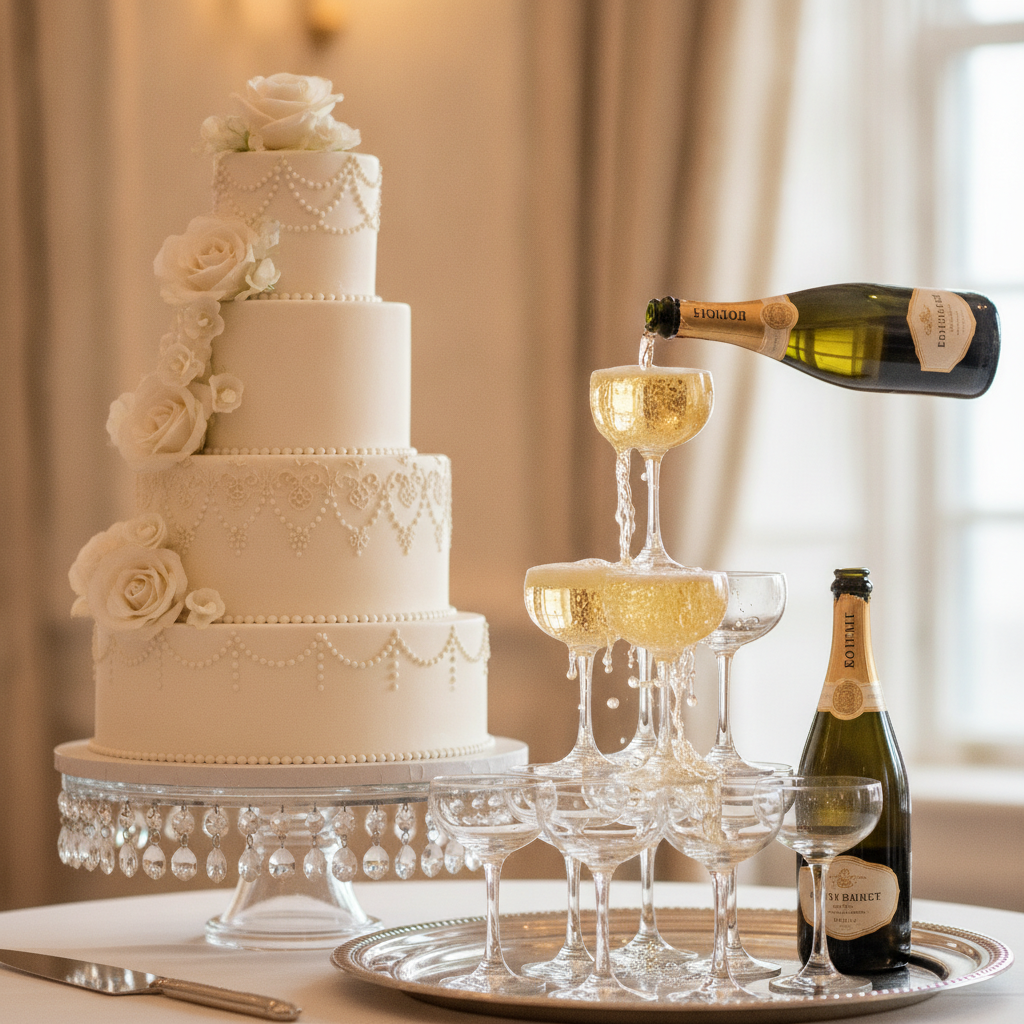
Combining your dessert reveal with a bubbling cascade of sparkling wine creates an unforgettable crescendo for your reception. A successful wedding cake champagne tower pairing seamlessly merges tradition with high-energy celebration. For couples leaning into a retro or Gatsby-esque aesthetic, this combination is the pinnacle of vintage wedding cake styling. Instead of two separate interruptions during your reception, merging these moments keeps your guests engaged and signals that the dance floor is officially open.
Flavor Harmony: Matching Bubbly with Cake Tiers
Your wedding cake champagne tower pairing isn't just a visual feast; it's a culinary experience. The golden rule of pairing wine with dessert is that the wine should be slightly sweeter than the food, otherwise the bubbly will taste bitter. If you are serving a rich, sugary buttercream or a decadent chocolate tier, opt for a Demi-Sec Champagne or a fruity Prosecco. Conversely, if your cake features tart lemon curds, fresh berries, or a less sweet Swiss meringue buttercream, a classic Brut Champagne will complement the acidity perfectly. Not sure what flavor profile fits your vibe? Take our wedding cake style quiz to narrow down your dessert preferences before consulting a sommelier.
Aesthetic Layouts for Picture-Perfect Moments
When designing your dessert station, spatial planning is crucial for both safety and photography. Photographers need clear sightlines to capture both the intricate details of your sugar flowers and the cascading bubbles. Avoid crowding the table. Position the champagne tower slightly forward and to one side of the cake. This staggered layout allows both elements to shine without visually overlapping. Ensure your venue provides a wide, sturdy table. If you are still looking for bakers who can craft a masterpiece worthy of sharing the spotlight with a crystal tower, browse local professionals on WeddingCakeHub, or check out top-tier creators in hubs like our Charleston directory.
Safety First: Preventing Spills and Tumbles
Safety is the most critical element of a wedding cake champagne tower pairing. First, always use coupe glasses, not flutes. Coupes have the necessary wide, flat base for stacking. Second, ensure there is a minimum of two feet between the tower and your cake. Champagne splashes are inevitable during the pour, and you do not want sticky alcohol dissolving your pristine fondant or bleeding your carefully piped buttercream colors. Additionally, place a clear acrylic drip tray beneath the glasses to catch overflow, preventing the table linens from becoming soaked and unstable.
Timing Strategies for a Seamless Reveal
The timing of your wedding cake champagne tower pairing sets the tone for the rest of the evening. The most strategic time to execute this dual-feature is immediately following the toasts and speeches, just after dinner concludes. Begin by stepping up to the table to cut the cake together. Once the slice is plated, immediately transition to the champagne pour. As the glasses fill and overflow, have your DJ or band play an upbeat, celebratory song. Hand the top two coupes to each other, raise a glass to your guests, and take a sip. This fluid transition naturally concludes the formal events of the evening and invites your guests to hit the dance floor while the venue staff serves the cake.
Frequently Asked Questions
How many glasses do I need for a champagne tower?
A standard champagne tower usually starts with a base of 4x4 or 5x5 glasses. A 4-tier tower requires 30 glasses, while a 5-tier tower requires 55 glasses. Always build your tower with classic coupe glasses for structural stability.
Should we cut the cake or pour the champagne first?
It is highly recommended to cut the wedding cake first. This ensures your hands and attire remain dry and un-sticky for the photos. Once the cake is cut, transition seamlessly into pouring the champagne for an energetic finale.
Can we use Prosecco instead of Champagne for the tower?
Absolutely! Prosecco, Cava, or even sparkling cider are excellent alternatives. In fact, sweeter sparkling wines like Prosecco often pair much better with sweet cake frostings and fillings than a very dry Brut Champagne.
What type of cake frosting works best near a champagne tower?
Fondant or firm Swiss meringue buttercream are the safest options. Avoid delicate whipped creams or loosely set frostings, as stray champagne splashes from the tower pour could cause fragile icings to melt or dis-color.
Does the champagne tower replace the traditional toast?
It certainly can. Many modern couples use the champagne tower pour as the visual climax of the evening's toasts. You can pour the tower immediately after the best man or maid of honor concludes their speech to kick off the celebration.
Written by Daniel Kim
Baker Spotlight Writer at WeddingCakes Hub. Helping couples find their perfect wedding cake.
Sponsored
BakeBoost — Grow Your Baking Business
Marketing tools built for bakers — boost your online presence, manage bookings, and attract more wedding cake clients effortlessly.
Learn more →You May Also Like
Looking for a wedding cake baker?
Browse our directory to find the perfect baker near you.
Find Bakers