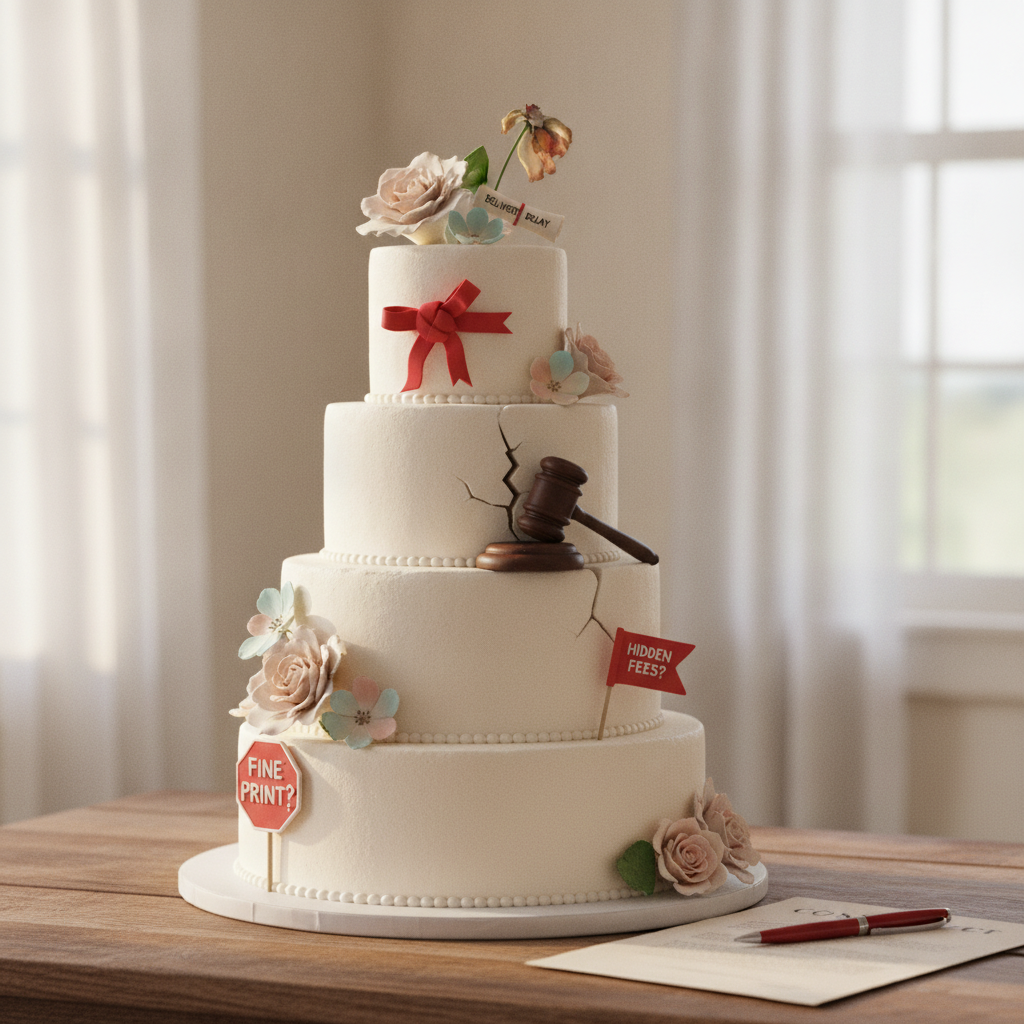
7 Wedding Cake Contract Clause Red Flags You Must Avoid
Avoid costly mistakes! Learn the top wedding cake contract clause red flags before you sign. Protect your budget and ensure your dream dessert is perfect.
Olivia Bennett
You have tasted the samples, fallen in love with a stunning design, and are ready to sign on the dotted line. But before you hand over your hard-earned deposit, it is crucial to read the fine print. Spotting wedding cake contract clause red flags early can save you from hidden fees, sudden cancellations, and a ruined dessert display. Let's explore the hidden legal traps to watch out for before finalizing your dream cake.
Why Reading the Fine Print Matters\n\nYou have narrowed down your favorite flavors and found the perfect professional by searching for bakers on WeddingCakeHub. While it is easy to get caught up in the excitement of fondant and buttercream, the legal agreement you sign is what truly guarantees your dessert arrives safely. Identifying wedding cake contract clause red flags is essential for protecting your wedding budget. Vendors naturally use contracts to protect their business, but the terms should always be fair to you, too.\n\n## 1. Vague Cancellation and Postponement Policies\n\nLife happens, and sometimes weddings get postponed or, in rare cases, canceled. One of the biggest wedding cake contract clause red flags is an agreement that offers zero flexibility or lacks a concrete timeline for cancellations. A standard vendor contract should outline exactly how much of your deposit is non-refundable and what happens if you need to reschedule at least 30 to 60 days out. If the policy simply states 'no refunds under any circumstances' without distinguishing between a cancellation six months out versus six days out, proceed with caution.\n\n## 2. The Missing Force Majeure Clause\n\nA 'Force Majeure' (often known as an act of God) clause protects both you and the baker in the event of unforeseen, unavoidable disasters—like extreme weather, global events, or venue fires. Without this clause, you could be on the hook for the full balance even if a hurricane prevents the wedding from happening entirely. Always ensure this clause is included, especially if you are hosting your event in regions prone to wild weather.\n\n## 3. Hidden Delivery and Setup Fees\n\nDelivery logistics can be incredibly complex. For example, bakers navigating busy city streets or remote venues in places like Austin, TX will naturally need to charge for their time, tolls, and travel. However, a major red flag is when delivery, setup, and equipment rental (like expensive cake stands) are not explicitly itemized in the contract. If your contract simply says 'delivery subject to additional fees' without quoting a flat rate or mileage fee, you could be hit with a massive surprise bill the week of your wedding. Ensure all logistical costs are locked in writing.\n\n## 4. Strict Design Change Deadlines\n\nIt is completely normal to refine your vision as your wedding day approaches. Maybe you initially wanted a classic look but recently decided a modern style cake fits your updated reception decor much better. A reasonable bakery will allow you to make minor design adjustments up to a month before the big day. If your contract locks you into a specific design six months in advance with heavy financial penalties for small changes, that is one of the key wedding cake contract clause red flags you should negotiate.\n\n## 5. Unclear Refund Terms for Damages\n\nWhat happens if the cake is damaged during transit or collapses at the reception before you even cut it? The contract must specify who bears the liability once the cake leaves the bakery. Typically, the baker is responsible until the cake is fully set up at the venue. If the contract shifts all liability to you the moment the delivery van leaves their shop, push back. You need a guarantee that the product will be delivered intact and fully assembled.\n\n## How to Negotiate Better Terms\n\nIf you spot any of these wedding cake contract clause red flags, do not panic. Most professional bakers are open to clarifying vague terms or making reasonable amendments. Approach the conversation politely and ask them to revise the wording so that both parties feel secure. If a vendor refuses to put verbal promises into writing or gets defensive when you ask questions, it might be time to walk away and find a different baker. If you are still unsure of what you are looking for in your ideal cake before reaching out to new vendors, take our wedding cake style quiz to narrow down your vision and find a professional who aligns perfectly with your needs.
Frequently Asked Questions
What should a standard wedding cake contract include?
A standard contract should include the wedding date, venue details, delivery time, flavor and design specifications, total cost (including taxes and delivery), payment schedule, cancellation policy, and liability terms for damages.
Can I negotiate the terms of my wedding cake contract?
Yes! Most independent bakers are willing to clarify ambiguous terms or adjust overly strict policies if you ask politely. However, non-refundable deposit amounts are usually firm as they secure your date on the baker's calendar.
What happens if the baker drops the wedding cake?
The contract should clearly state that the baker assumes liability until the cake is successfully delivered and set up at the venue. If the cake is damaged in transit, a fair contract will guarantee a partial or full refund depending on the severity of the damage.
How late can I change my wedding cake design?
Most bakeries allow minor design changes up to 30 days before the wedding. Significant changes that require special tools, structural supports, or expensive ingredients may need more notice and could alter the final price.
Are delivery fees usually included in the cake price?
Delivery is rarely included in the per-slice price. It is usually calculated based on mileage and setup complexity. Ensure your contract lists a specific delivery fee rather than a vague 'TBD' charge to avoid surprise costs.
Written by Olivia Bennett
Wedding Planning Expert at WeddingCakes Hub. Helping couples find their perfect wedding cake.
Sponsored
BakeBoost — Grow Your Baking Business
Marketing tools built for bakers — boost your online presence, manage bookings, and attract more wedding cake clients effortlessly.
Learn more →You May Also Like
Looking for a wedding cake baker?
Browse our directory to find the perfect baker near you.
Find Bakers